Navigating the Global Crisis of Discrimination Against Sikh Students
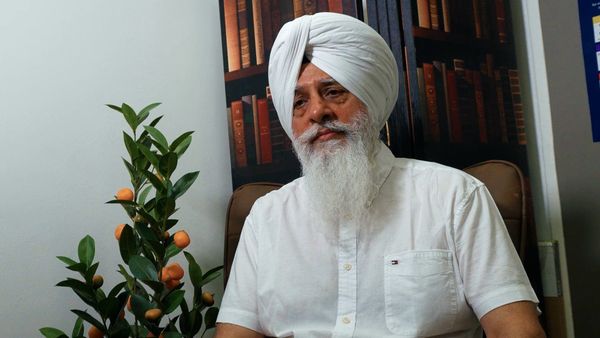
In the spiritual framework of the Sikh faith, the Dastaar (turban), Kara (steel bangle), and Kirpan (ceremonial sword) are essential symbols. They are deeply tied to the Sikh identity and represent a commitment to justice, equality, and sovereignty. These articles are not just signs of faith; they shape identity and ethical responsibility.
However, in today’s educational setting, which aims to encourage inclusion and personal growth, these same symbols are often seen as problems. Instead of being respected, they face scrutiny. Instead of being safeguarded, they become targets. From classrooms in London to exam halls in India, and from school corridors in North America to institutions in Pakistan, Sikh students often find themselves in an impossible situation. They must seek education while also fighting to be recognized as they are.
This situation is not about isolated incidents or individual bias. It represents a broader global issue that reveals deeper fears about visible differences, religious diversity, and the effectiveness of institutional inclusion.
The Statistical Reality of the “Perpetual Foreigner
The 2024 Sikh Coalition report, "Where Are You Really From?", provides significant insights into the experiences of Sikh students today. Its title reflects a harmful stereotype known as the "perpetual foreigner" trope. This concept arises not only from blatant exclusion but also from subtler, ongoing questions about belonging. It suggests that Sikh students, regardless of their citizenship or family history, are viewed as outsiders who must justify their presence.
The report highlights a major gap between how schools define bullying and the actual experiences of students. Around half of Sikh students reported being bullied during the 2022-2023 academic year. In contrast, an objective measure using the Multidimensional Peer Victimization Scale Revised showed that 77.5 percent experienced some form of victimization.
This gap isn’t just a statistical fluke; it indicates a troubling normalization. When students do not label harmful experiences as “bullying,” it means they accept discrimination as a routine part of life. Verbal abuse, physical intimidation, social exclusion, and online harassment become everyday occurrences rather than exceptional violations.
Such normalization has serious psychological effects. It can lead to a conditioned tolerance for harm, where students adopt coping strategies that mask trauma instead of addressing it. This adaptation doesn’t lessen the impact of discrimination. It hides its seriousness and allows institutions to underestimate the problem's scale.
The Gendered Violence of Visibility
Discrimination against Sikh students is uneven. It is particularly prevalent among those who openly express their religious identity, especially Sikh males who wear the Dastaar or Patka.
The report states that 76.8 percent of students wearing religious head coverings encountered bullying, with much higher rates of physical victimization. In this context, visibility turns into vulnerability. The very item that represents dignity and spiritual discipline becomes a target for aggression.
This pattern illustrates how visibly distinct identities attract more scrutiny and hostility. The Sikh turban is often misinterpreted or misrepresented in global conversations, leading to ridicule, stereotyping, and physical interference. Incidents where people touch, pull, or forcibly remove turbans occur frequently.
Such acts are serious. In Sikh tradition, forcibly removing a turban symbolizes profound humiliation, historically linked to domination. When this occurs in schools, the acts carry dual meanings. They violate personal dignity and assault religious identity.
The effects reach beyond immediate harm. Students who face this treatment often suffer from lower self-esteem, disengagement in school, and long-lasting psychological distress. The classroom, rather than empowering students, turns into a space filled with anxiety.
The Silence of the Guardians
One of the most concerning findings from recent studies is not just the prevalence of bullying but the failure of those in charge to stop it. While 74 percent of Sikh students know about reporting options, about 45.7 percent opt not to report incidents. This hesitation stems from a lack of trust in how institutions respond. Students see patterns. When 62.8 percent report that teachers or staff rarely step in, it sends a clear message: reporting will not lead to real action. In such environments, silence becomes both a survival tactic and a sign of institutional failure. This situation can be seen as an institutional bystander effect, where those in authority, by doing nothing, implicitly support harmful behaviour. The lack of intervention bolsters aggressors and deepens the victims’ isolation.
Even more concerning is that 10.9 percent of Sikh students face bullying from staff members. This shifts the issue from negligence to active involvement in discrimination. When teachers, who are supposed to create safe environments, make fun of or dismiss religious practices, they harm individual students and create a culture where such behaviour is acceptable. In these contexts, schools fail to act as protective spaces, instead becoming extensions of the societal bias that Sikh students endure daily.
Global Echoes of Exclusion
The challenges facing Sikh students are not limited to any one country. They are part of a worldwide pattern where institutions struggle to accommodate visible religious identities within uniform frameworks.
India: Constitutional Promises vs. Institutional Practices
In India, where Sikhism began, discrimination often takes an institutional form. Reports of students being barred from exams unless they remove their Kirpan or Dastaar highlight a stark gap between constitutional rights and real-life practices. These incidents are frequently justified under “security” claims. However, such justifications ignore the explicit protections outlined in Article 25 of the Indian Constitution, which allows Sikhs to carry the Kirpan. The outcome is a coercive choice: fit in or be excluded. Students who have spent years preparing for exams must sacrifice their religious identity for access to these opportunities. This is not simply a matter of administrative oversight; it is a form of systemic discrimination that views Sikh identity as incompatible with institutional norms.
Western Contexts: Neutrality as Exclusion
In countries like the United Kingdom, Canada, and parts of Europe, discrimination often appears as policies that claim to be “neutral.” Dress codes, safety regulations, and secularism laws are presented as equally applicable, yet they disproportionately hurt visibly religious minorities. Legal cases involving the right to wear the Kara in schools show how “neutrality” can lead to exclusion. By not accommodating specific religious practices, such policies prioritize dominant cultural norms while side-lining others.
Pakistan: Vulnerability and Violence
In Pakistan, the situation is often more dire. Sikh students, as a small religious minority, encounter social discrimination and physical violence. Incidents involving forced participation in non-Sikh religious practices or the removal of religious symbols illustrate the dangers faced by minorities in such environments. Here, the struggle extends beyond inclusion. It becomes a matter of safety and survival.
The Erosion of Mental Well-Being
The cumulative effects of these experiences show up in the mental health of Sikh students. Research indicates a strong link between exposure to bullying and higher levels of anxiety, depression, and distress. When 82 percent of students report facing microaggressions, the impact is ongoing. Students live in a state of heightened alert, always anticipating possible hostility. This constant vigilance regarding their identity disrupts their ability to concentrate, participate, and succeed academically. Importantly, having supportive peers or positive experiences does not fully counteract these effects. Bullying remains a critical predictor of distress, often overshadowing any protective factors. In environments where support from institutions is weak, consequences can be even harsher, sometimes leading students to withdraw from their educational paths altogether.
Institutional Gaslighting and the "Security" Fallacy
A common issue in various contexts is using "security" or "standardization" to justify exclusion. Policies that limit the wearing of religious items are often framed as neutral safety measures. However, when such policies ignore the religious significance of items like the Kirpan, they become discriminatory.
This leads to institutional gaslighting, where Sikh students must defend their beliefs within frameworks that do not accommodate them. Their identity is seen as a problem that needs management rather than a right that needs protection.
These practices undermine trust in institutions and reinforce the belief that systems of authority are out of step with the pluralism they claim to support.
The Rise of Staff-Led Marginalization
When educators participate in discriminatory practices, it worsens the situation. Through either blatant mockery or subtle exclusion, staff behaviour influences the social climate of schools. When teachers disregard Sikh identity, they set a standard for disrespect among students. This dynamic has long-term consequences. Students who face discrimination from teachers can develop a deep distrust of institutional structures, affecting their academic paths and broader engagement with society.
The Path Toward Collective Empowerment
Tackling this crisis requires more than just reactive measures. It needs a clear strategy that includes legal reform, educational changes, and community involvement.
1. Institutional Accountability and Legal Reform
Clear definitions of bias-based bullying must be established and enforced. Data collection should differentiate incidents to highlight the specific experiences of Sikh students. Legal frameworks must be improved to ensure that religious rights are consistently upheld in all institutions. Students facing discrimination should have easy access to legal support.
2. Educating the Educator
Cultural competency training should be a required part of teacher education. Educators need to have accurate knowledge about Sikh practices and the importance of religious items. Understanding should replace curiosity, and respect should replace mere tolerance.
3. Strengthening Internal Support Networks
Student-led organizations and peer support systems can create vital spaces for dialogue, validation, and advocacy. These networks help students navigate challenges together instead of alone.
4. Public Awareness and Representation
Challenging stereotypes involves increasing visibility. Media, storytelling, and public engagement can reshape perceptions and highlight the contributions of Sikh communities.
Strategic Inclusivity and Long-Term Change
To achieve lasting change, institutions must adopt a proactive approach that embeds respect for diversity into their frameworks.
Key measures include:
- Tracking discrimination with data transparency
- Using inclusivity metrics to evaluate school performance
- Creating community school partnerships to enhance dialogue and understanding
These initiatives shift the focus from managing crises to preventing them, ensuring inclusivity becomes a core principle rather than a reaction.
Conclusion
The discrimination faced by Sikh students reflects broader societal issues surrounding identity, visibility, and belonging.
Every instance of exclusion, whether subtle or overt, shows a failure to uphold the values of equality and dignity. Yet, within this challenge lies a chance for change.
The Sikh ethos of Chardi Kala, which emphasizes resilience and optimism, provides a strong foundation for resistance and renewal. By turning data into action, advocacy into policy, and awareness into understanding, the Sikh community can transform the educational landscape.
Classrooms should not be places of compromise. They must be spaces where identity is respected, and difference is valued.
The struggle for Sikh students is ultimately a struggle for the integrity of pluralism itself. This struggle calls for not just recognition, but true transformation.